Consistent NSFW AI art starts with a neutral identity anchor and a rule: change the scene, clothing, pose, or style without changing the person. Define visible identity traits, keep every subject clearly adult, use one authorized reference, and compare outputs in a fixed order. When identity drifts, return to the last stable image instead of continuing from a failure.
Build an identity anchor
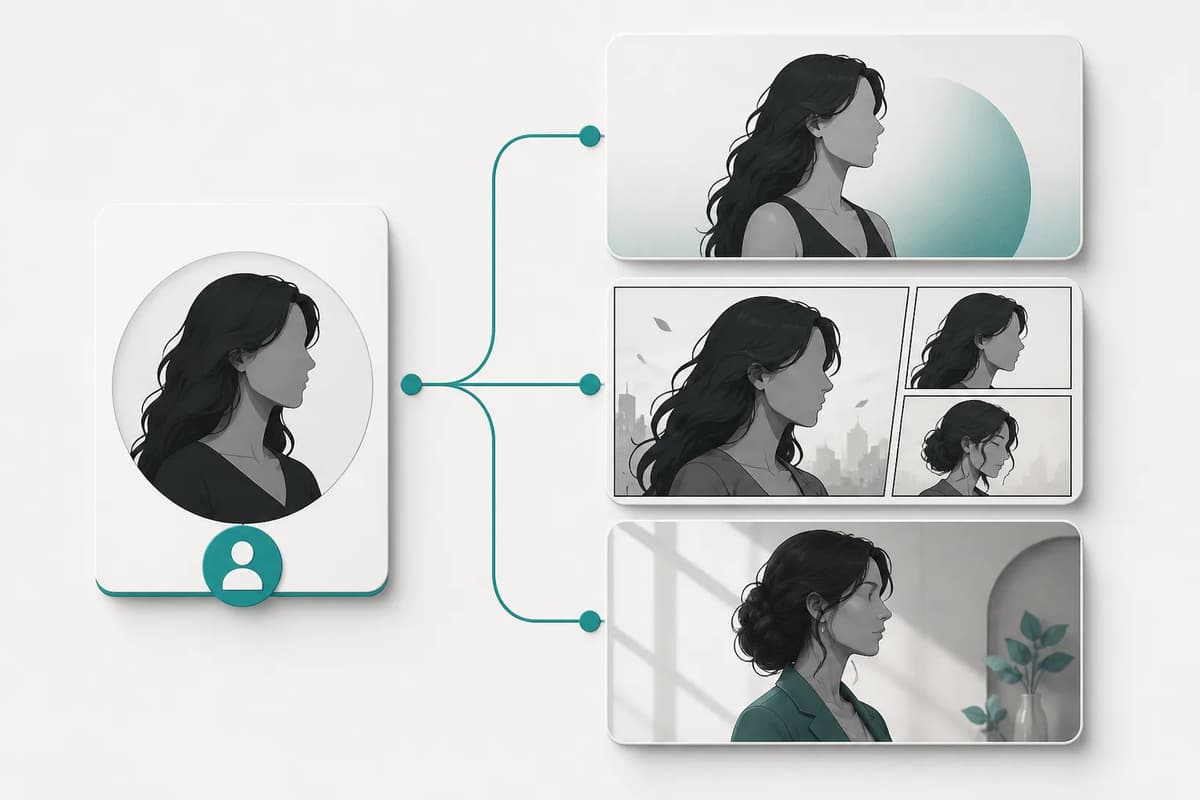
Choose one portrait where the face, hairline, jaw, eyes, and shoulders are easy to read. Neutral light and a three-quarter view usually provide more information than a dramatic crop. The anchor can be an original generated character or an authorized real-person reference. For real people, specific adult-use consent is required; public availability is not consent.
Write an identity block of five to eight observable traits. Include adult age cues, face shape, hair silhouette and color, skin tone, build, and one signature accessory. Exclude temporary mood, room, action, and clothing unless a garment is permanently part of the character.
| Preserve | Describe with | Do not confuse with |
|---|---|---|
| Face | Shape, jaw, eye spacing, nose profile | Expression or camera angle |
| Hair | Color, length, texture, silhouette | Wind or temporary styling |
| Adult status | Clear adult features and presentation | Vague terms such as “young” |
| Build | Broad proportions and stature | One pose or lens distortion |
| Signature detail | Scar, jewelry, color accent | Busy background props |
Change one layer at a time
Separate identity, visual style, scene, camera, and intensity. If you change all five, you cannot diagnose drift. Start by changing a scene while keeping style and camera stable. Then test a new camera angle. Next try a makeover. Only after the identity survives should you move into a more complex comic or video composition.
This is especially important in adult art because dramatic poses and occlusion can hide the face. A result may look polished while depicting a different person. Compare the face and hair before judging lighting or anatomy. The Adult Character Creator guide provides a clean way to establish the first anchor.
Use references deliberately
More references are not always better. One clear identity image plus one optional style reference is easier to interpret than five mixed images. Label each source by role. Do not include an explicit result merely because it matches the desired intensity; it may be a poor identity source.
Crop only when necessary and preserve enough context to understand head and body proportions. Remove unrelated people from the reference. Avoid screenshots with UI, captions, or watermarks. Check metadata and sharing behavior before upload. See the upload privacy guide for a detailed file checklist.
Score every output consistently
Use the same review order:
- Clearly adult, with no age ambiguity.
- Same face geometry and recognizable expression range.
- Same hair color, texture, and silhouette.
- Compatible body build and proportions.
- Scene and clothing changed as requested.
- Hands, anatomy, text, and background are usable.
- No accidental logo, watermark, or extra person.
Score each identity item as stable, questionable, or replaced. “Questionable” should not become the source for another generation. If two reviewers disagree on whether it is the same person, return to the anchor.
Keep comic scenes focused
Comics introduce more identity pressure than portraits. Use one main character, one scene, and one completed composition. Specify the main character’s position and camera distance. Keep other adults visually subordinate when the primary identity matters. If the workflow is designed for a single image, explicitly exclude panels, speech bubbles, captions, and watermarks.
Flowith’s Adult Comic Generator uses one character image and one of six scene directions. The fixed scene mapping reduces prompt ambiguity, but you should still inspect whether the face and hair survived the composition. The adult comic prompt guide explains scene-level constraints.
Use a safe makeover chain
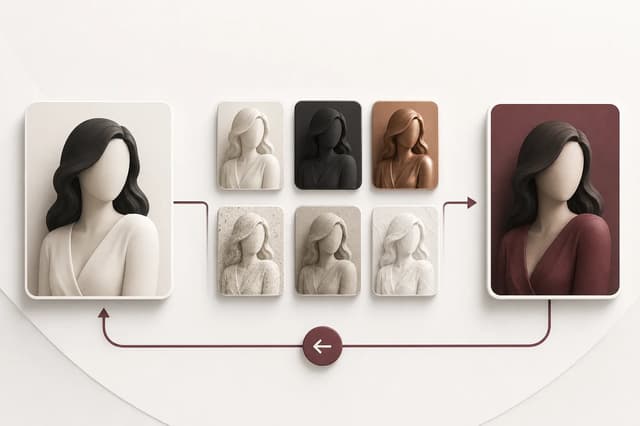
For makeovers, preserve only three working versions: original, previous, and current. Each new generation starts from the last approved image. If the current result changes identity, discard it and return to previous. Do not continue a chain because the clothing is attractive while the face is wrong; drift compounds quickly.
Choose one makeover direction per round: lingerie restyle, leather, fantasy roleplay, hotel, poolside, or dark club. Add an optional prompt only for a supporting detail. Flowith’s Adult Makeover is structured around that single-change approach.
Manage style without replacing identity
Anime, semi-realistic, and dark fantasy interpret facial detail differently. Consistency does not require identical pixels; it requires recognizable identity within the selected rendering language. Preserve silhouette and proportions while allowing line weight, texture, and lighting to change.
When moving between styles, first generate a neutral portrait in the destination style. Compare identity before adding an adult scene. If the transition fails, simplify descriptors or use a stronger reference. The adult style comparison lists the visual decisions each style should control.
Store a minimal continuity record
Keep the approved anchor, identity block, current style, successful scene result, and any model/version notes available to your team. Record why a result was rejected. Do not store sensitive consent documents in public project metadata or prompt text.
Media History helps locate outputs, while Canvas can hold approved references and selected results together. A compact record is enough; a complex branching system is unnecessary until a real project needs it. What matters is that every new artifact points back to a stable identity source.
Final takeaway
Treat character consistency as a controlled review process. Establish one adult identity anchor, separate identity from scene and style, change one layer at a time, reject questionable outputs, and continue only from approved results. This produces a character that can survive portraits, comics, makeovers, and later animation without relying on luck.