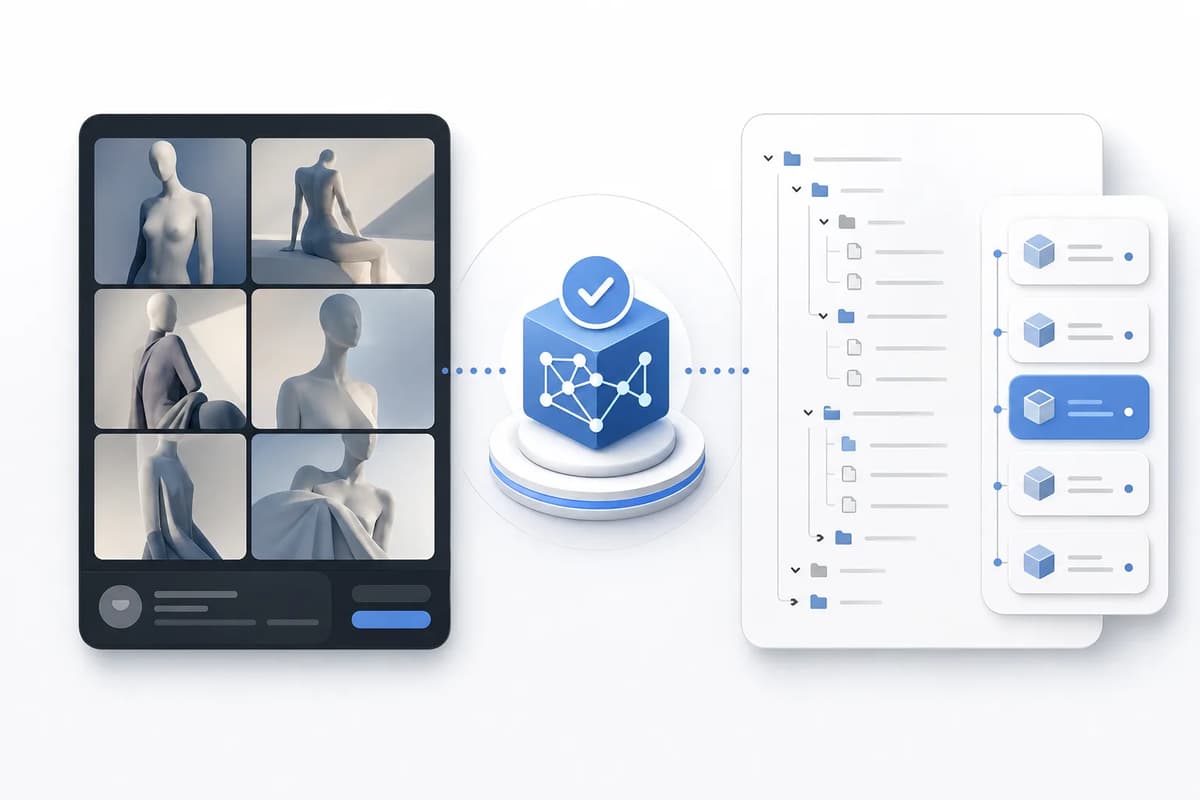
Civitai is generally organized around visual model discovery, while Hugging Face is organized around repositories, files, model cards, and developer tooling. For adult LoRA research, that means Civitai can make examples and creator intent easier to scan, while Hugging Face can make versioned files and technical documentation easier to inspect. Neither host guarantees that an asset is suitable, licensed for your use, or safe for a particular reference. Treat the host as evidence storage, not as permission.
Compare the discovery experience
Civitai’s model pages are image-first. Thumbnails, tags, versions, example parameters, and creator notes help a visual artist decide whether a LoRA matches a character or style. Hugging Face repositories are file-first. A repository may include a model card, commit history, configuration files, weights, and links to code. It can be excellent for reproducibility, but the useful visual evidence may be sparse or external.
The right starting point depends on your question. “What kind of adult anime line work does this LoRA create?” is easier to answer with consistent examples. “Which exact file and revision did our pipeline use?” is easier to answer with repository history. A production workflow often uses both kinds of evidence even if the asset is downloaded from only one host.
| Decision | Civitai strength | Hugging Face strength |
|---|---|---|
| Visual fit | Prominent examples and tags | Depends on model-card quality |
| File traceability | Version pages and downloads | Repository commits and exact revisions |
| Workflow notes | Creator prompts and community examples | Technical cards, configs, and code links |
| License evidence | Page-level license and creator notes | Repository license files and card metadata |
| Adult visibility | Explicit-content controls and labels | Repository access varies by author and policy |
Identify what the LoRA controls
“Adult LoRA” is not a useful technical category by itself. A LoRA may control a character identity, clothing concept, pose family, rendering style, anatomy tendency, or a narrow scene. Determine its role before adding it to a pipeline. A character LoRA should be judged on identity across scenes. A style LoRA should be judged on line, color, texture, and lighting without replacing identity. A concept LoRA should be judged on whether it introduces the intended attribute cleanly.
Do not stack several assets before you understand one. Start with the base model, then add one LoRA at a moderate weight and run a neutral adult portrait. Change camera angle and wardrobe while keeping the identity description stable. If the face collapses when the scene changes, the asset may be overfit or your weight may be too high. The adult LoRA character consistency guide provides a controlled test matrix.
Verify files and versions
File names are not reliable version identifiers. Record the page URL, version or commit, filename, size, and checksum when available. If the same asset appears on both hosts, do not assume the files are identical. Compare hashes and metadata. A repost may omit a license, include a modified merge, or point to an obsolete version.
Keep a small asset record:
- Host and canonical creator page.
- Exact version, revision, or commit.
- Filename and checksum.
- Declared base model.
- Declared license and creator restrictions.
- Intended role in your workflow.
- Date reviewed.
This record is more useful than a folder named “final_models.” It lets you reproduce a result, replace a questionable asset, and answer where a character style came from.
Treat licenses as layered evidence
A repository license can govern the weights while the creator’s page adds conditions about hosted generation or commercial work. Conversely, a model card may link to an upstream base-model license that still applies. Read all relevant layers. If conditions conflict or the author is unclear, pause commercial use and ask the rights holder.
The subject of an output adds another layer. A permissive LoRA license does not grant a right to use a real person’s likeness, a copyrighted character, or a private photograph. Adult material also requires clear age and consent. Our NSFW model licensing guide separates platform, model, reference, and publishing rights.
Evaluate documentation quality
A strong asset page explains the base model, trigger concepts, recommended range, known limitations, and license. It shows more than one subject and camera angle. It avoids presenting only cherry-picked results. It identifies whether example images used additional LoRAs, ControlNet, face restoration, or manual edits. Without that context, an impressive gallery is not a reproducible benchmark.
On Hugging Face, inspect the files and recent commits. On Civitai, inspect version-specific examples and creator updates. In both places, note unanswered questions rather than filling them with guesses. If an asset lacks an adult-status statement or repeatedly produces age-ambiguous characters, remove it from adult workflows even when its visual style is appealing.
Move to a focused character workflow
Once you have extracted the useful visual direction, you may not need to expose LoRA selection to every creator. A focused interface can turn research into clear choices: presentation, archetype, and visual style. This reduces accidental changes and makes results easier to compare. Flowith’s Adult Character Creator offers that kind of fixed input contract, with an optional authorized reference for identity.
Use the generated character as a clean reference for later comic or video work. Save a neutral portrait in addition to scene-specific results. Neutral references preserve face and hair better than images with extreme perspective or heavy occlusion. The character consistency guide explains how to build that reference pack.
Choose by the evidence you need
Choose Civitai when you need fast visual comparison and creator examples. Choose Hugging Face when you need repository-level traceability and technical integration. Use both when an asset’s visual evidence and file history live in different places. In every case, verify exact versions, document licenses, test one role at a time, and keep adult consent and age checks outside the model-host decision. That process matters more than the logo above the download button.